Sanaa Simon of Christ the King High School Wins the 13–17 Award for Most Creative Essay in the Global Recycling Day Competition


Sanaa Simon of Christ the King High School Wins the 13–17 Award for Most Creative Essay in the Global Recycling Day Competition

Sponsored by Tropical Adventures
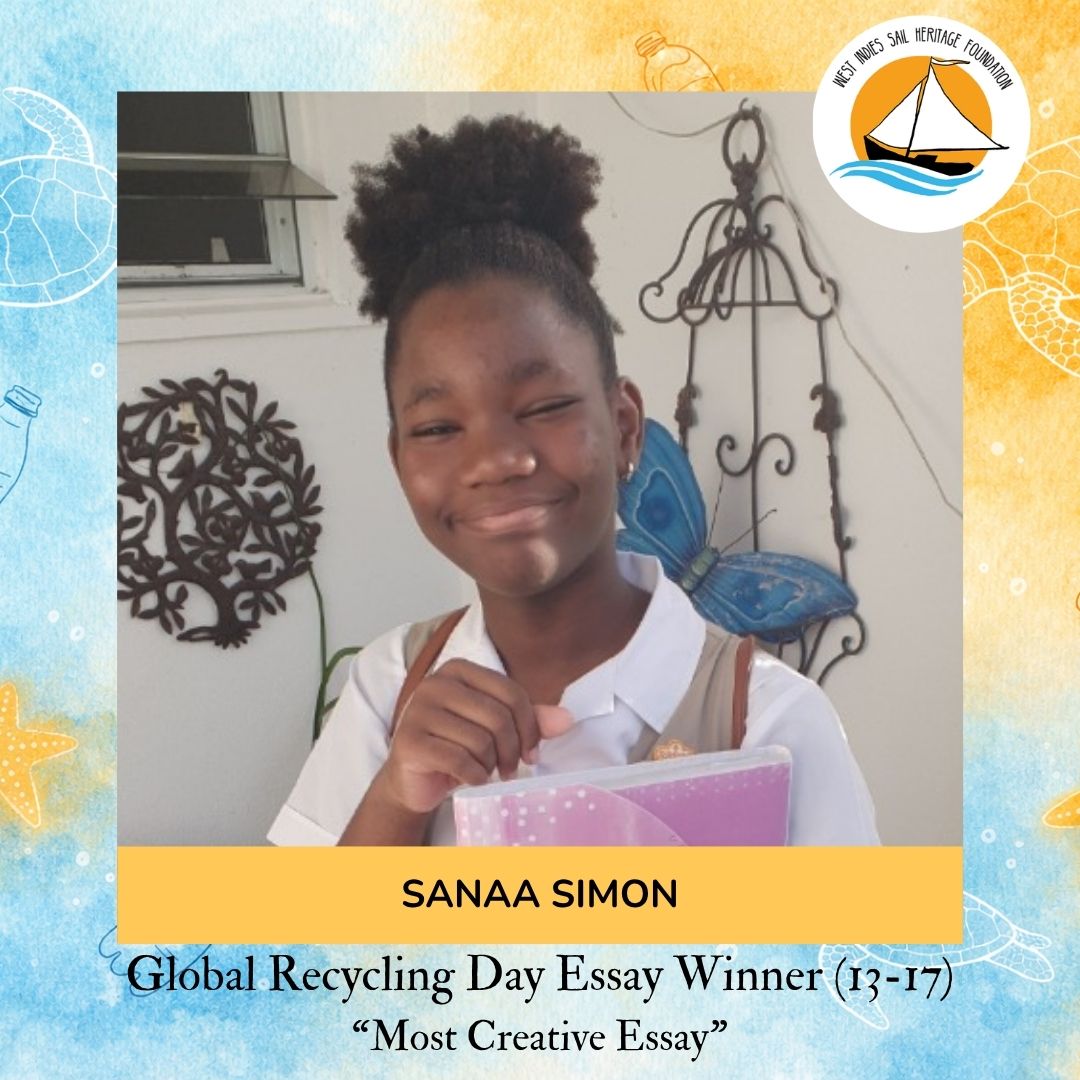
 

Sanaa’s essay stood out to the judges for its thoughtful vision of how Antigua & Barbuda can tackle the growing issue of plastic waste by learning from successful environmental practices in other countries. Drawing inspiration from Sweden’s waste management systems, her essay explores how recycling incentives, stronger landfill regulations, and waste-to-energy solutions could help transform plastic waste from a problem into an opportunity.

Her work reflects a powerful idea: that with creativity, community participation, and responsible policies, Antigua & Barbuda can protect its natural beauty and build a cleaner future.

We are proud to share her essay below:


By Sanaa Simon, Christ the King High School – Winner, 13-17 Category (Most Creative Essay)

Antigua and Barbuda is polluted with enormous amounts of non-biodegradable waste and plastic that covers our fields, infrastructure and natural wonders. It has become such an issue that anywhere you look, there is some kind of plastic or trash in the corner. In cases such as these, it would be appropriate to take inspiration from a country that has overcome this issue, such as Sweden. In Sweden, around 1% of household waste ends up in landfills and nearly half of total waste is recycled or turned into energy. This essay will discuss how Antigua and Barbuda can use Sweden as an example to deal with waste reduction.

To start off, Sweden has high recycling rates, meaning approximately half of all household waste is recycled, with a separation of hazardous materials and electronic devices. Antigua and Barbuda could adopt this method by implementing a general recycling programme with incentives for those who participate, such as a small payment for every few pieces of plastic waste recycled and/or having a discount card programme for groceries or bills. This could encourage citizens to help clean up the community and recycle plastic and waste.

Additionally, introducing stricter landfill regulations could also help Antigua and Barbuda with waste management and reduction. In 2005, Sweden put forward a “landfill ban,” making it illegal to throw organic and combustible waste into landfills. We could take a page from their book by establishing tighter, stricter regulation policies. For example, ensuring landfill cells do not exceed their capacities and ensuring toxic waste materials, including landfill leachates, are properly disposed of, could ensure a cleaner future for Antigua and Barbuda.

Lastly, Sweden has a “waste-to-energy” system, meaning additional waste, like that which is left after the recycling process, is sent to be incinerated and turned into energy. Such energy is used to power homes and other buildings, which also reduces the reliance on fossil fuels as energy sources. Antigua and Barbuda could use this method to turn most of its litter and trash into power, which can bring benefits to the entire nation while preventing our natural wonders from becoming dump sites.

To conclude, implementing a solid recycling programme with added rewards for those who participate, stricter landfill regulations and policies, and using waste to fuel homes and buildings could help Antigua and Barbuda with its waste reduction, using Sweden as an example. Just as we can pride ourselves in being a nation with 365 beaches, we could also pride ourselves in being the cleanest country in the Caribbean.

With the public’s support and cooperation, the notion of a cleaner Antigua and Barbuda could be closer than we realize.  


Congratulations to Sanaa for her creative vision and contribution to the conversation about protecting the environment in Antigua & Barbuda.

We want to thank all students, teachers, and schools who participated in this year’s Global Recycling Day Essay Competition. Through initiatives like this, we hope to continue encouraging young people to think boldly, write confidently, and help shape a more sustainable future for our islands. We would also like to thank our Prize Sponsor, Tropical Adventures, for sponsoring Sanaa’s prize.

 

Zende Hazelwood of St. Anthony’s Secondary School Wins the 13–17 Category for Most Structured Essay in the Global Recycling Day Competition


Zende Hazelwood of St. Anthony’s Secondary School Wins the 13–17 Category for Most Structured Essay in the Global Recycling Day Competition

Sponsored by Adventure Antigua


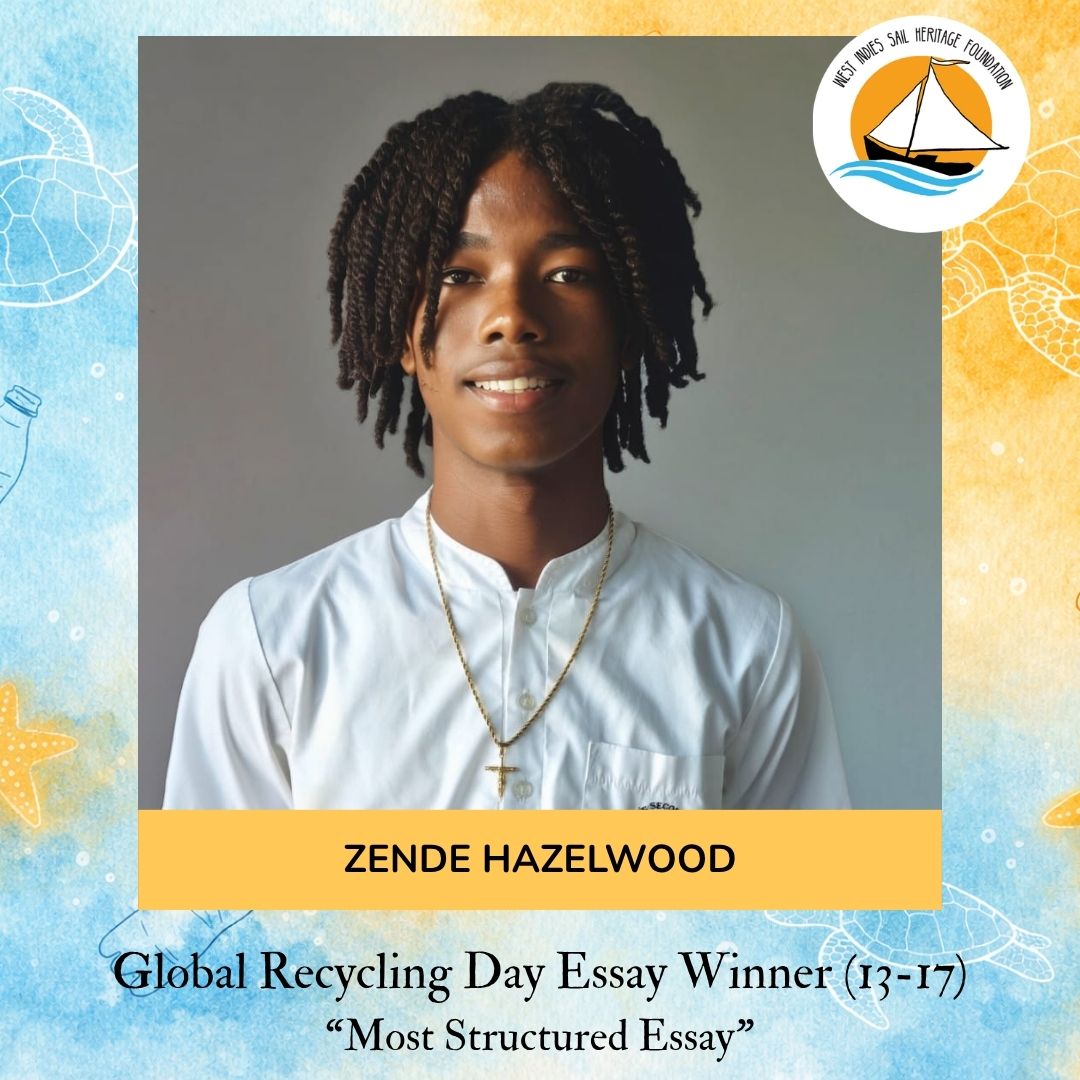
We are pleased to announce that Zende Hazelwood is the winner of the 13–17 category award for Most Structured Essay. His submission impressed the judges with its strong organization, well-researched ideas, and clear presentation of practical solutions that Antigua & Barbuda could adopt to reduce plastic pollution.

In his essay, Turning Waste into Worth, Zende examines how countries like Sweden have successfully reduced plastic waste through recycling systems, education, and innovation. He also proposes ways Antigua & Barbuda could adapt similar strategies, including bottle deposit programs, community recycling initiatives, and creative reuse of plastic materials.

His essay demonstrates how young thinkers can contribute meaningful ideas toward protecting our environment and preserving the beauty of our islands.

We are proud to share his winning essay below.


Turning Waste into Worth

By Zende Hazelwood, St. Anthony’s Secondary School – Winner, 13–17 Category (Most Structured Essay)

Plastic waste is one of the worst environmental problems in the world today, and in a small twin-island nation like Antigua and Barbuda, its effects are even more visible, widespread and damaging. Plastic bottles, food containers, and other items can be found along roadsides, in gutters, and washed up on beaches that are meant to be enjoyed by both residents and visitors.

These beaches are not only part of the nation’s natural beauty but also the foundation of its tourism industry. Pollution makes the islands look dirty and damages the natural environment. Clean oceans and healthy coral reefs are essential for marine life and tourism. However, plastic waste damages these fragile ecosystems. Animals such as fish, turtles, and seabirds can become trapped in plastic or mistake it for food.

While plastic has become a symbol of pollution, it doesn’t have to stay that way. By learning from countries that have already made progress, Antigua and Barbuda can transform plastic waste into an opportunity for positive change and economic growth.

One country that has successfully minimized plastic waste is Sweden. Recycling in Sweden is a normal part of daily life. Households separate their garbage into categories such as plastics, metals, paper, and organic matter. One of the most effective parts of Sweden’s system is that its citizens are then rewarded through a bottle deposit system, where they receive money for the plastic bottles and cans that they recycle.

This system motivates people to continue recycling because they receive both financial and environmental benefits. Additionally, Sweden has developed energy plants that safely turn non-recyclable waste into electricity and heat. This reduces the amount of waste that ends up in landfills while still generating clean energy that powers homes and businesses. These strategies show that with the right approach, innovation and public participation, plastic waste can be managed effectively.

Antigua and Barbuda could adapt such strategies to handle its own plastic waste problem. For example, introducing a bottle deposit system would encourage residents and visitors to return plastic bottles instead of discarding them. Clearly marked collection bins could be placed at supermarkets, schools, beaches and other busy areas to make recycling easy and accessible. Not only would this help reduce pollution, but would also create jobs in collection, transportation and recycling services.

Education must also play a major role. Schools could educate students about the importance of sorting waste and protecting the environment. When children learn recycling habits early, they are more likely to carry them into adulthood and influence their families and communities. Public campaigns using music, social media and local influencers could make recycling cool and appealing.

Antigua & Barbuda could explore creative ways of reusing plastic waste. Recycled plastic could be used to make benches, bus stops, school furniture or eco-friendly building materials. Local entrepreneurs could turn plastic into art, souvenirs and other items that promote environmental responsibility. Resorts and hotels could be encouraged to participate in recycling programs, offering rewards to tourists who recycle during their stay. Small waste-to-energy plants could also help to safely convert non-recyclable plastic into electricity.

Strong laws and proper enforcement are also needed. Although education and incentives encourage people to recycle, rules help ensure that everyone takes responsibility for their actions. When individuals know that throwing plastic on the ground or into the sea can result in fines or other penalties, they are more likely to think twice before littering.

Fines collected from littering offences could be reinvested into environmental programs such as beach cleanups, recycling facilities and public awareness campaigns. This creates a system where pollution directly funds solutions.

In conclusion, fixing the plastic waste problem in Antigua and Barbuda will require creativity, effort, and a willingness to learn from other countries. By adapting successful strategies from Sweden, such as bottle deposit systems, educational programs, innovative waste-to-energy solutions, and strong enforcement, our nation can reduce plastic pollution and protect its natural beauty.

Every plastic bottle recycled and every effort to reduce waste brings us closer to a cleaner, healthier future. If we all work together, plastic waste can become more than a problem; it can become a powerful tool for positive change.


Congratulations to Zende for his outstanding contribution and for inspiring new ideas on how Antigua & Barbuda can protect its environment for future generations.

We would like to thank all students, teachers, and schools who participated in this year’s Global Recycling Day Essay Competition. We look forward to continuing to empower young voices to imagine solutions for a more sustainable future. We would also like to thank our Prize Sponsor, Adventure Antigua, for sponsoring Zende’s prize.

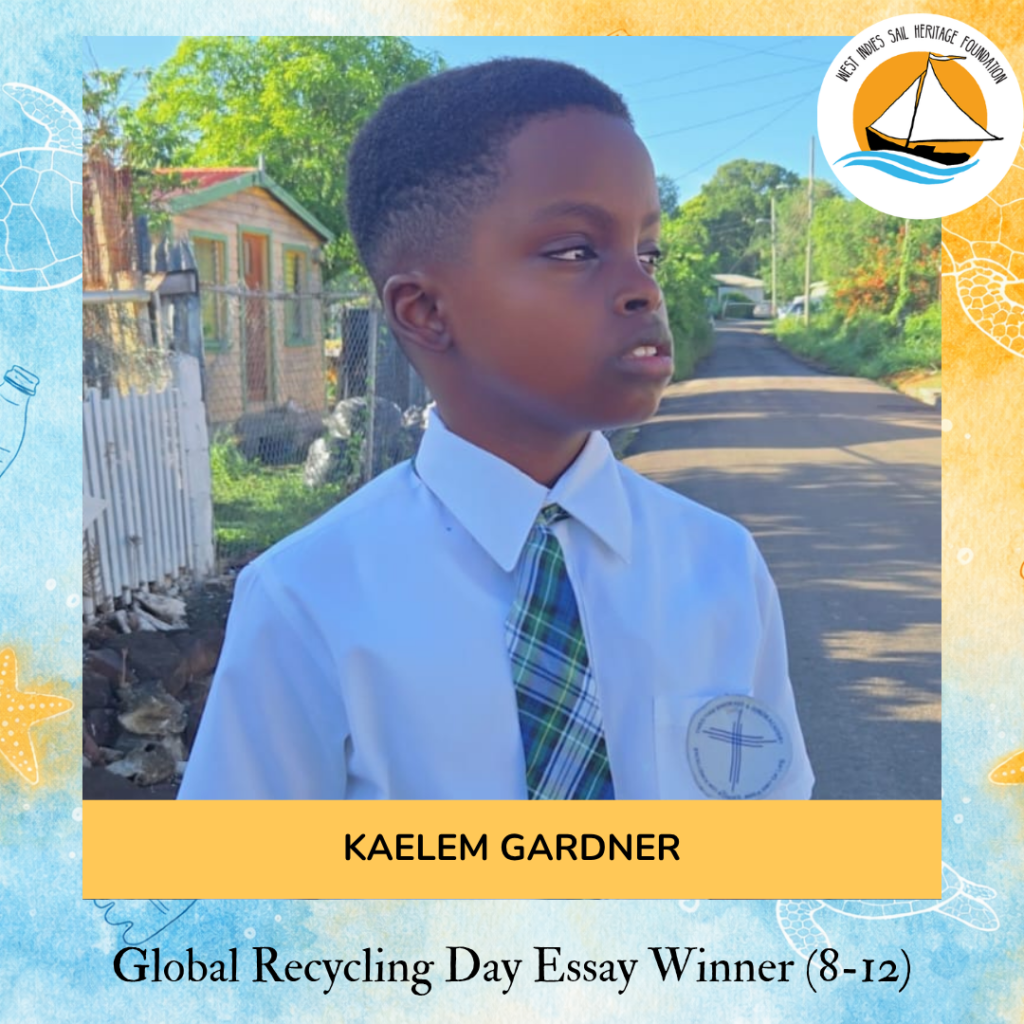
Celebrating Young Voices: Kaelem Gardner of Christian Union Pre & Junior Academy Wins the 8–12 Essay Writing Category


CELEBRATING YOUNG VOICES: KAELEM GARDNER OF CHRISTIAN UNION PRE & JUNIOR ACADEMY WINS THE 8-12 ESSAY WRITING CATEGORY

Sponsored by South Coast Horizon & Scooteroo


We are proud to celebrate the creativity and thoughtfulness of young writers in Antigua & Barbuda through our Global Recycling Day Essay Writing Competition.

This year, we received inspiring submissions from students who shared their ideas about protecting our islands, caring for our environment, and imagining a better future for our communities.

We are delighted to announce that Kaelem Gardner is the winner of the 8–12 category. His essay stood out to our judges for its clear structure, creative thinking, and practical ideas for addressing one of the most important environmental challenges facing island nations: plastic waste.

Kaelem’s essay, Plastic With a Purpose: A New Idea for Antigua & Barbuda, explores how plastic waste could be turned into useful community resources while encouraging citizens to participate in keeping the island clean.

Through thoughtful research and imaginative thinking, he proposes a creative “Plastic Points” system that would reward people for collecting plastic while turning recycled materials into community infrastructure like benches, bus stops, and picnic tables. 

We are proud to share his winning essay below:


Plastic With a Purpose: A New Idea for Antigua & Barbuda

By Kaelem Gardner, Christian Union Pre & Junior Academy – Winner, 8-12 Essay Writing Category

Plastic waste is a big problem in many countries, including Antigua & Barbuda. Because our island is small, plastic can quickly end up on the beach or in the sea. This can harm animals and make our island look dirty. Since tourism is important to us, that’s a serious problem. I think instead of treating plastic like garbage, we should find creative ways to reuse it.

A country with a smart solution is the Netherlands. They don’t just recycle plastic in the normal way. They actually turn it into things like roads and outdoor furniture. The plastic is made into strong materials that last a long time. They also test their ideas in small areas first to make sure everything works before doing it across the country.

Antigua & Barbuda could use an idea like this in our own way. We could create something called “The Plastic Points.” People could bring clean plastic, such as bottles and containers, to different collection spots around the island. When they bring plastic, they earn points. The points they earn could be used for school supplies, bus fares, or small discounts at local shops. This would give people a reason to collect plastic because it would actually be worth something.

Another idea is to use the plastic we collect to make things our community can use. It could become park benches, bus stops, school picnic tables, or parts of beach walkways. Each one could have a small sign that says it was made from recycled plastic. This would show people that their hard work really made a difference.

This idea is not only about cleaning up plastic. It helps the environment, creates jobs, and encourages young people to help. It would also keep Antigua clean and beautiful for everyone.

Plastic waste does not have to stay a problem. If we work as a team and come up with smart ideas, Antigua & Barbuda can turn plastic into something good and show other islands what is possible.


Congratulations to Kaelem for his thoughtful contribution and for inspiring us all to think creatively about protecting our beautiful islands.

We would like to thank all students, teachers, and schools who participated in this year’s competition. We look forward to continuing to encourage young voices and ideas that help shape a better future for Antigua & Barbuda. We would also like to thank our Prize Sponsors, South Coast Horizon and Scooteroo for sponsoring Kaelem’s prizes.


School # 2 completed the Ocean Love NO Plastic NO Waste program!


SCHOOL #2 COMPLETED IN THE OCEAN LOVE NO PLASTIC NO WASTE PROGRAM!


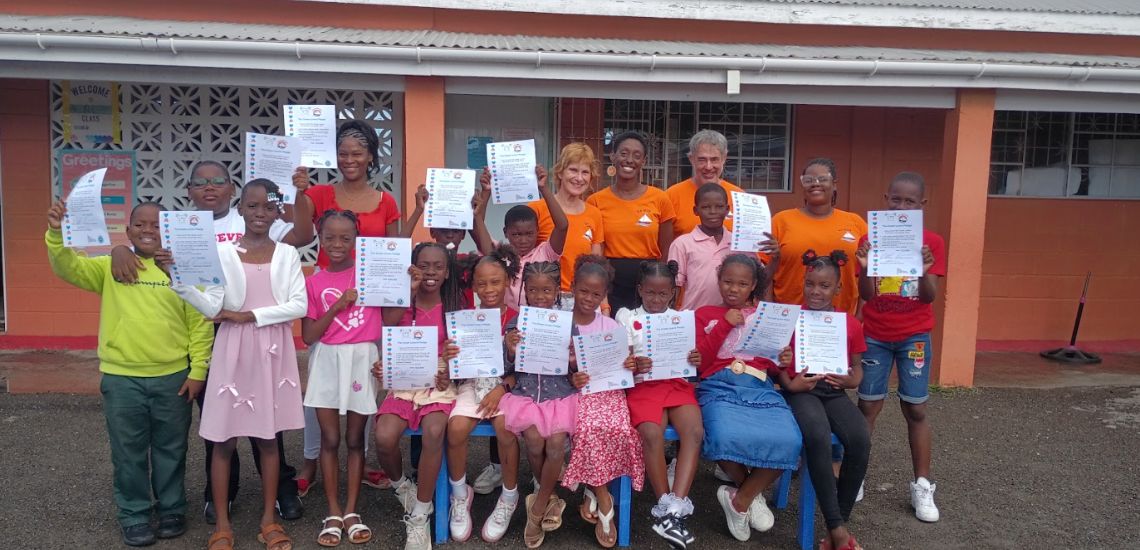
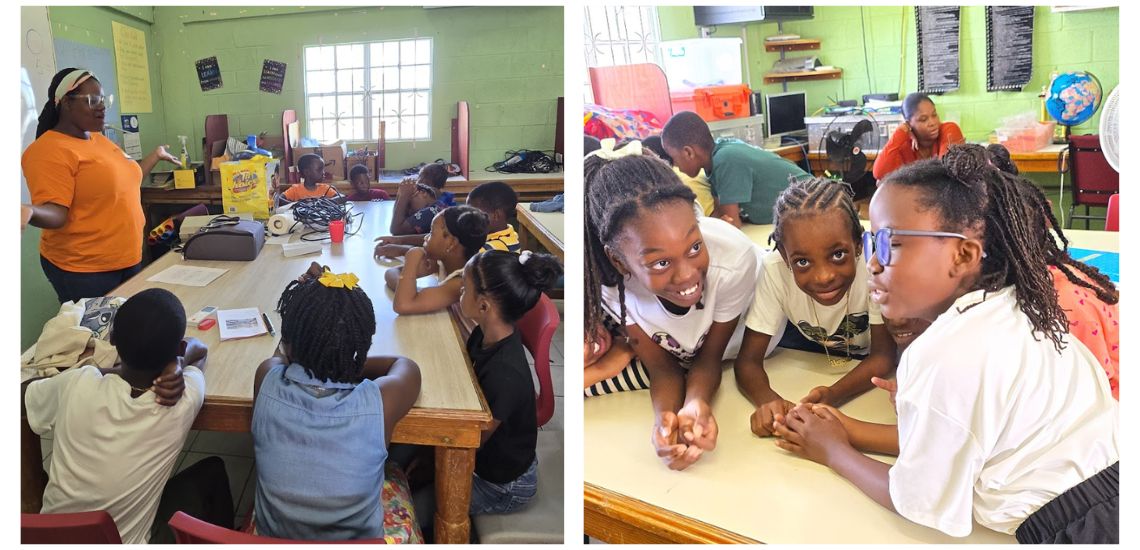
The Ocean Love NO Plastic NO Waste movement continues to grow, and with it, a new wave of young environmental champions is rising. We are proud to celebrate the successful completion of our second Ocean Love NO Plastic NO Waste School Program for the 2026 season. This time with the incredible students and staff of Newfield Primary School.

From the very beginning, the students demonstrated enthusiasm, curiosity, and a genuine passion for protecting the environment. Their active participation in discussions about plastic pollution and ocean conservation reminded us of the power of youth engagement. They didn’t just listen, they questioned, reflected, and contributed ideas, proving that even the youngest voices can drive meaningful change.

Young Minds, Powerful Messages

One of the program’s inspiring moments came during the Assignment Session, when students explored the 4Rs: REFUSE, REDUCE, REUSE, and RECYCLE. They brought their ideas to life through creativity and expression.

As a class, the students shared a heartfelt poem:

Refuse the plastics we use each day
Take only what you really need,
That’s how we let our planet breathe.
Refuse waste by saying “NO THANK YOU,”
Plastic straws, we don’t need you.

Their words reflected not only creativity but also a good awareness of how small, everyday choices can shape a better future. Seeing such insight and passion at a young age gives us tremendous hope.

From Learning to Action

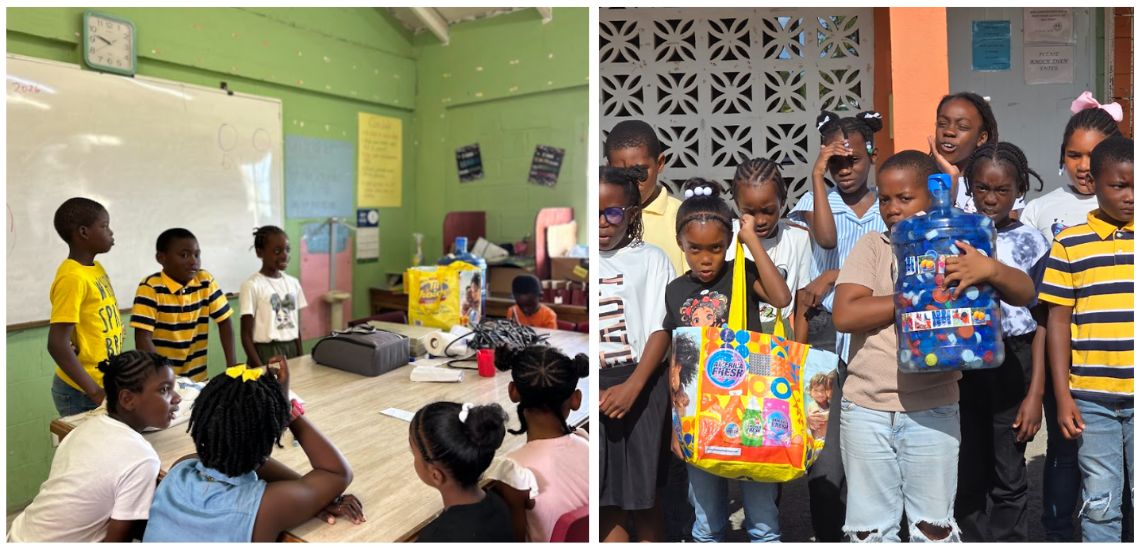
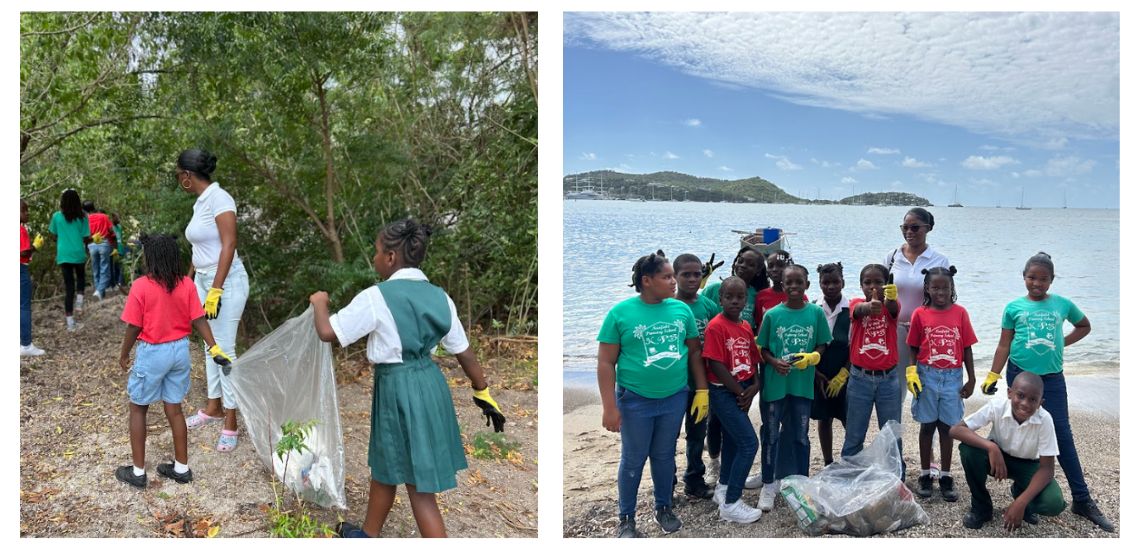
The program extended beyond the classroom with a hands-on Plastic Upcycle Workshop and Beach Clean. Armed with gloves, determination, and teamwork, the students headed to the beach to make a difference.

Despite the beach having been cleaned less than two weeks earlier, the group still collected a noticeable amount of waste. This stark reality highlighted an important lesson: plastic pollution is persistent, and ongoing action is essential.

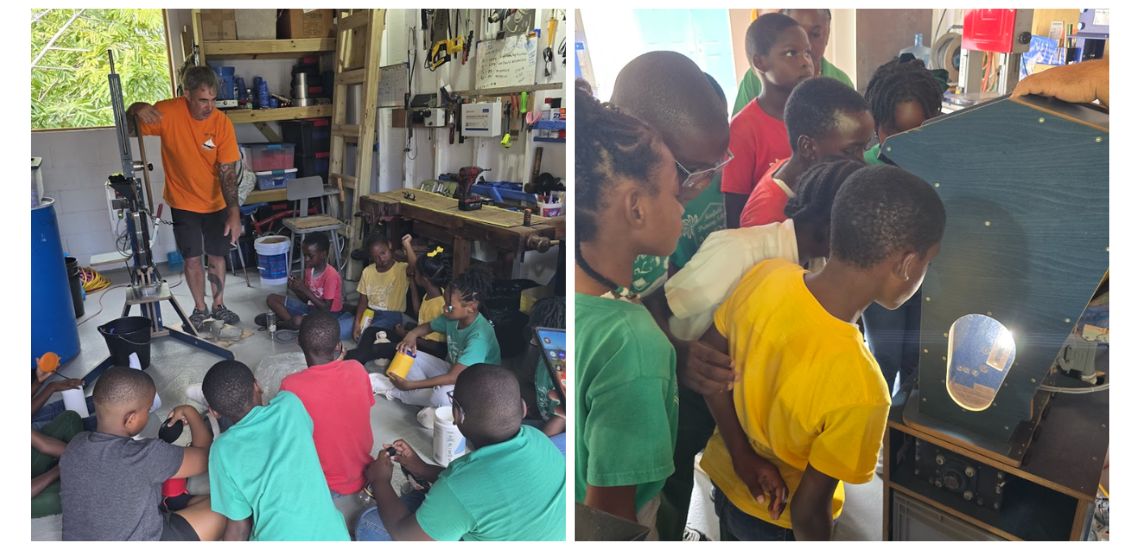
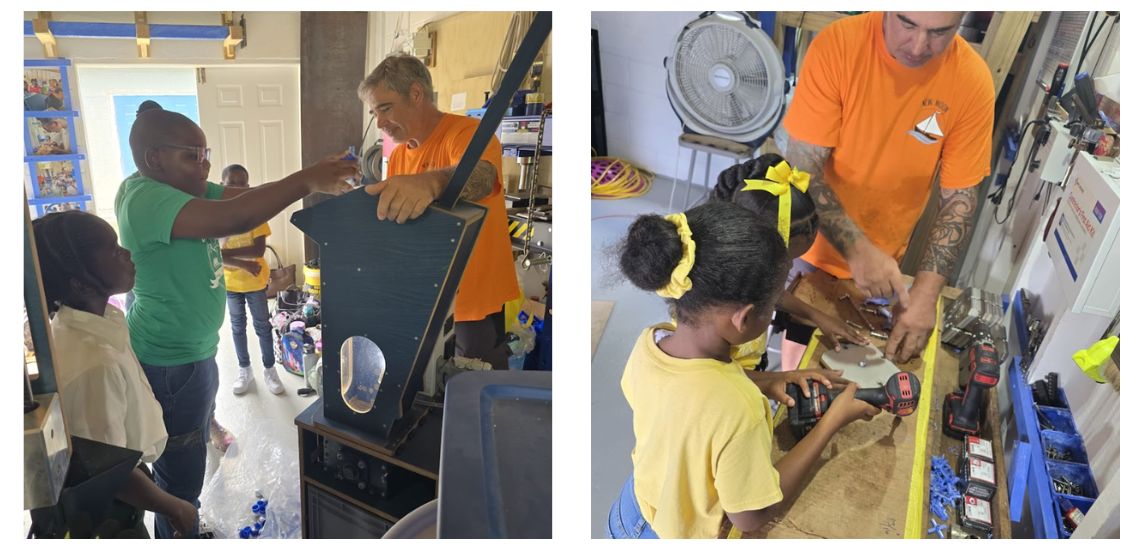
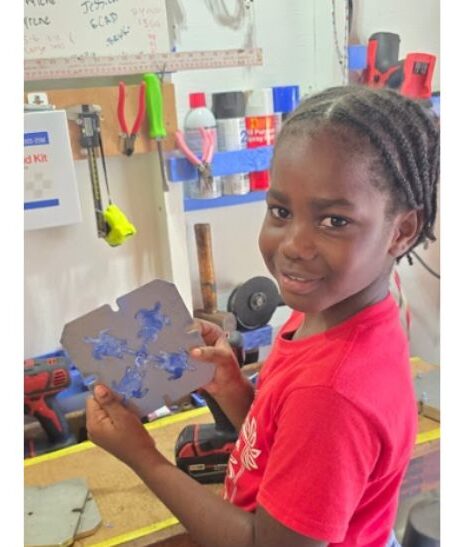
But the students didn’t stop there. During the workshop, they transformed collected plastic into useful items, experiencing firsthand how waste can be repurposed into something valuable. This process reinforced a powerful message:

Plastic doesn’t have to end up in our oceans; it can be given a second life.


Turning Waste into Value

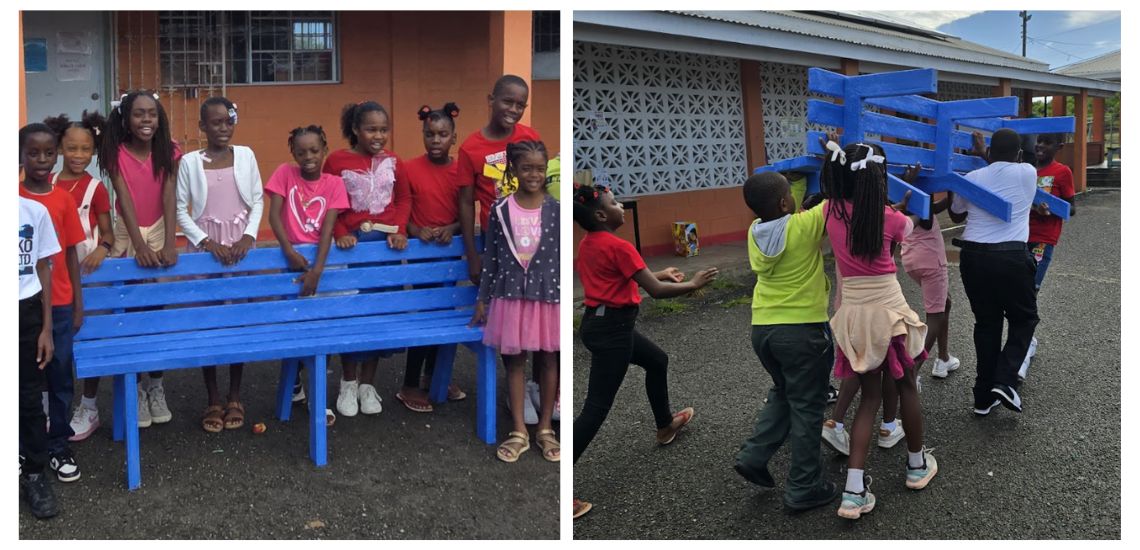
To mark this milestone, the program proudly donated another recycled bench made entirely from plastic waste, around 20,000 bottle caps. Combined with the first bench, that’s more than 40,000 caps kept out of the environment.

Why a bench? Because it’s more than just a functional piece, it’s a symbol. A symbol of transformation, of community effort, and of what’s possible when people come together with purpose. Durable and meaningful, these benches serve both students and staff while telling a powerful story of sustainability.

And this is just the beginning. With plans to repurpose over 150,000 bottle caps, the initiative continues to turn waste into something lasting and impactful.


The Bigger Picture

Plastic pollution is more than an environmental issue; it’s a global challenge that affects ecosystems, wildlife, and human health. Small items like bottle caps may seem harmless, but they break down into microplastics that enter our food chain and harm marine life.

In regions like the Caribbean, where oceans support tourism, fisheries, and livelihoods, protecting marine environments is critical. Programs like Ocean Love NO Plastic NO Waste are helping to address this challenge at its root, through education and empowerment.

Building Future Environmental Leaders

Environmental stewardship starts early. By teaching young people about sustainability, we are shaping a generation that thinks critically, acts responsibly, and values the natural world.

Every student who participated signed the Ocean Lovers Pledge, committing to reduce plastic use, collect waste, and reuse materials wherever possible. These small promises, multiplied across communities, create a powerful ripple effect.

Growing Impact Across Communities

Newfield Primary School is the second of seven schools participating in the Ocean Love program in 2026. Alongside them, organizations like the Girl Guides of Antigua and Barbuda are also joining the movement.

The numbers are already impressive:

  • Hundreds of students engaged
  • Thousands of bottle caps diverted from the ocean

But beyond the numbers lies something even more meaningful, a cultural shift toward environmental responsibility.


A Collective Effort

This success would not be possible without the support of dedicated partners and sponsors who believe in investing in the next generation. Their contributions go beyond funding; they represent a shared commitment to protecting our oceans and empowering youth.

We extend our deepest gratitude to our funders who believe in investing in the next generation of environmental leaders:

Your commitment is not simply financial support. It is a declaration that the future of our oceans matters.

You helped prevent plastic from entering the ocean.
You helped create a permanent symbol of transformation.
You helped ignite lifelong awareness in young minds.

We also extend heartfelt appreciation to:

  • Antigua Barbuda Waste Recycling Corporation (ABREC) for donating plastic to support our upcycling efforts. https://www.facebook.com/p/Abwrec-Antigua-Barbuda-Waste-Recycling- Corporation-100064779066506/
  • Global Environment Facility Small Grants Programme for being the pioneering funders of our Ocean Love No Plastic No Waste Workshop. Your early belief made this initiative possible. https://www.facebook.com/GEFSGPAntiguaBarbuda/


Looking Ahead

New Field Primary School is the second of seven schools joining the Ocean Love NO Plastic NO Waste program in 2026. 
– Over hundreds of students.
– Over thousands of caps diverted from the ocean.
A ripple effect of change is spreading across Antigua and Barbuda.

As we celebrate this milestone, we also look forward to what’s next. Each school, each student, and each action adds momentum to a growing movement.

The message is clear

Change starts with awareness, grows through action, and thrives through collaboration.

And with students like those at Newfield Primary leading the way, the future of our oceans looks brighter than ever.