
Zende Hazelwood of St. Anthony’s Secondary School Wins the 13–17 Category for Most Structured Essay in the Global Recycling Day Competition
Sponsored by Adventure Antigua
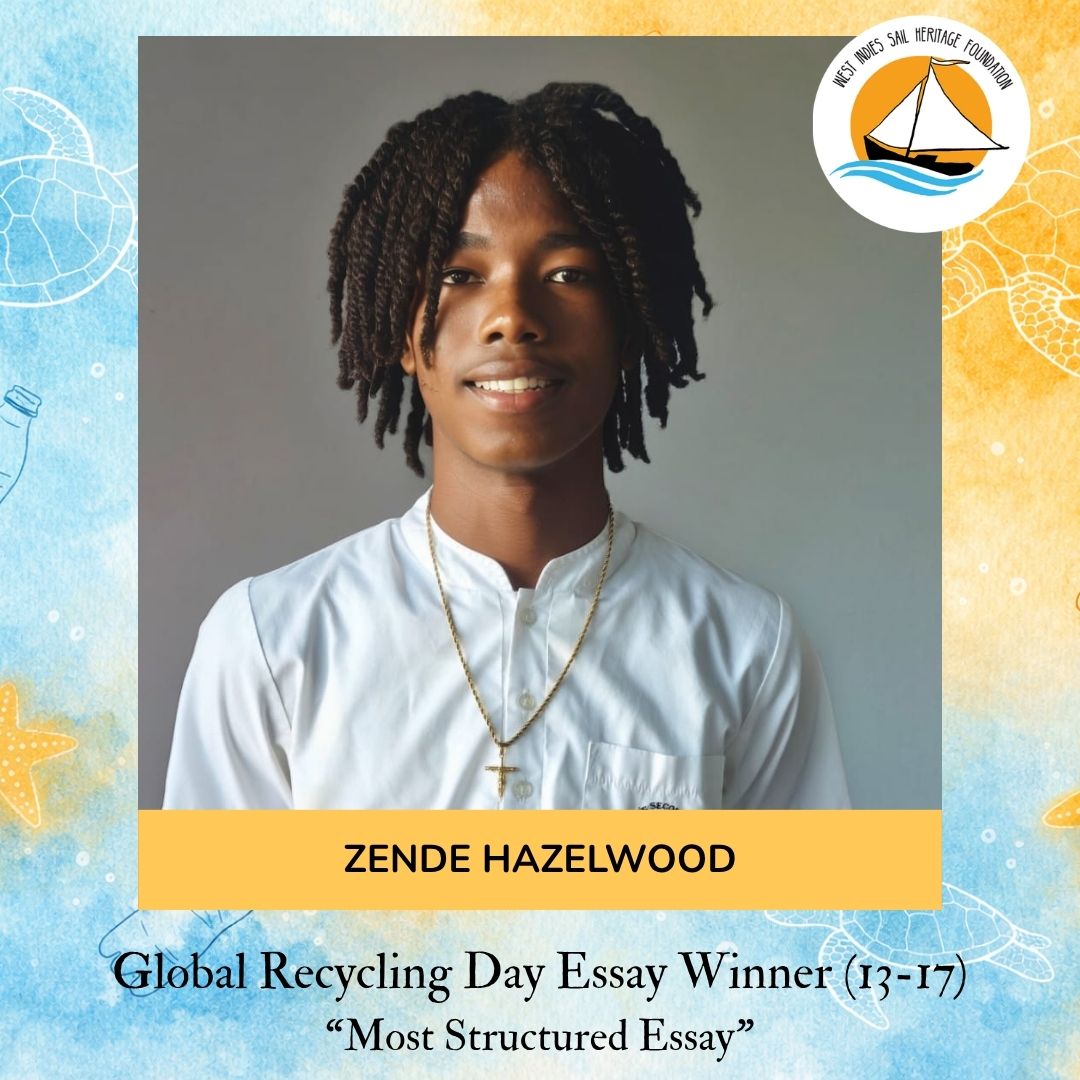
We are pleased to announce that Zende Hazelwood is the winner of the 13–17 category award for Most Structured Essay. His submission impressed the judges with its strong organization, well-researched ideas, and clear presentation of practical solutions that Antigua & Barbuda could adopt to reduce plastic pollution.
In his essay, Turning Waste into Worth, Zende examines how countries like Sweden have successfully reduced plastic waste through recycling systems, education, and innovation. He also proposes ways Antigua & Barbuda could adapt similar strategies, including bottle deposit programs, community recycling initiatives, and creative reuse of plastic materials.
His essay demonstrates how young thinkers can contribute meaningful ideas toward protecting our environment and preserving the beauty of our islands.
We are proud to share his winning essay below.
Turning Waste into Worth
By Zende Hazelwood, St. Anthony’s Secondary School – Winner, 13–17 Category (Most Structured Essay)
Plastic waste is one of the worst environmental problems in the world today, and in a small twin-island nation like Antigua and Barbuda, its effects are even more visible, widespread and damaging. Plastic bottles, food containers, and other items can be found along roadsides, in gutters, and washed up on beaches that are meant to be enjoyed by both residents and visitors.
These beaches are not only part of the nation’s natural beauty but also the foundation of its tourism industry. Pollution makes the islands look dirty and damages the natural environment. Clean oceans and healthy coral reefs are essential for marine life and tourism. However, plastic waste damages these fragile ecosystems. Animals such as fish, turtles, and seabirds can become trapped in plastic or mistake it for food.
While plastic has become a symbol of pollution, it doesn’t have to stay that way. By learning from countries that have already made progress, Antigua and Barbuda can transform plastic waste into an opportunity for positive change and economic growth.
One country that has successfully minimized plastic waste is Sweden. Recycling in Sweden is a normal part of daily life. Households separate their garbage into categories such as plastics, metals, paper, and organic matter. One of the most effective parts of Sweden’s system is that its citizens are then rewarded through a bottle deposit system, where they receive money for the plastic bottles and cans that they recycle.
This system motivates people to continue recycling because they receive both financial and environmental benefits. Additionally, Sweden has developed energy plants that safely turn non-recyclable waste into electricity and heat. This reduces the amount of waste that ends up in landfills while still generating clean energy that powers homes and businesses. These strategies show that with the right approach, innovation and public participation, plastic waste can be managed effectively.
Antigua and Barbuda could adapt such strategies to handle its own plastic waste problem. For example, introducing a bottle deposit system would encourage residents and visitors to return plastic bottles instead of discarding them. Clearly marked collection bins could be placed at supermarkets, schools, beaches and other busy areas to make recycling easy and accessible. Not only would this help reduce pollution, but would also create jobs in collection, transportation and recycling services.
Education must also play a major role. Schools could educate students about the importance of sorting waste and protecting the environment. When children learn recycling habits early, they are more likely to carry them into adulthood and influence their families and communities. Public campaigns using music, social media and local influencers could make recycling cool and appealing.
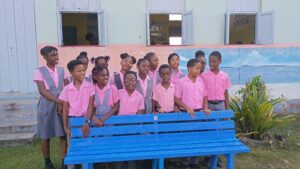
Antigua & Barbuda could explore creative ways of reusing plastic waste. Recycled plastic could be used to make benches, bus stops, school furniture or eco-friendly building materials. Local entrepreneurs could turn plastic into art, souvenirs and other items that promote environmental responsibility. Resorts and hotels could be encouraged to participate in recycling programs, offering rewards to tourists who recycle during their stay. Small waste-to-energy plants could also help to safely convert non-recyclable plastic into electricity.
Strong laws and proper enforcement are also needed. Although education and incentives encourage people to recycle, rules help ensure that everyone takes responsibility for their actions. When individuals know that throwing plastic on the ground or into the sea can result in fines or other penalties, they are more likely to think twice before littering.
Fines collected from littering offences could be reinvested into environmental programs such as beach cleanups, recycling facilities and public awareness campaigns. This creates a system where pollution directly funds solutions.
In conclusion, fixing the plastic waste problem in Antigua and Barbuda will require creativity, effort, and a willingness to learn from other countries. By adapting successful strategies from Sweden, such as bottle deposit systems, educational programs, innovative waste-to-energy solutions, and strong enforcement, our nation can reduce plastic pollution and protect its natural beauty.
Every plastic bottle recycled and every effort to reduce waste brings us closer to a cleaner, healthier future. If we all work together, plastic waste can become more than a problem; it can become a powerful tool for positive change.
Congratulations to Zende for his outstanding contribution and for inspiring new ideas on how Antigua & Barbuda can protect its environment for future generations.
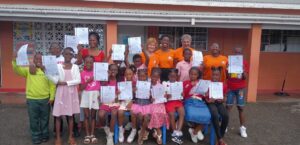
We would like to thank all students, teachers, and schools who participated in this year’s Global Recycling Day Essay Competition. We look forward to continuing to empower young voices to imagine solutions for a more sustainable future. We would also like to thank our Prize Sponsor, Adventure Antigua, for sponsoring Zende’s prize.


No comment yet, add your voice below!